Homily and Bulletin for
Solemnity of All Saints
When we say, “All Saints,” well, just how many are there? Various books list about 10,000 holy men and women we refer to as saints - the vast majority not exactly “household names.” How many saints? We have no idea!
10,000 is a small number compared to the 144,000 mentioned in the Book of Revelation today. But 144,000 is a symbol for a vast crowd. The actual number of those in heaven must far exceed that.
It’s estimated that just in the last two thousand years about 46 billion people have been born. So, we’d expect the number of saints to be mind boggling! And growing all the time!
So, on All Saints Day it’s this vast multitude, beyond our ability to count, that we’re celebrating, a reminder of the sheer scale of God’s love.
And, I think it’s important to remember that we’re not celebrating the achievements of human beings - but really the triumph of God’s love within the hearts of those human beings.
In celebrating the lives of all saints - the recognized ones, we say “canonized” - as well as those holy people we’ve even known - we’ve come to believe that becoming a saint is possible for everyone. And that’s because of God’s love, God’s grace.
Well, becoming a saint is our goal too.
It sounds old fashioned to some ears but the very goal of life is sainthood - ultimately to live with God in heaven. That’s our primary vocation. The Christian measures their quality of life by their desire for heaven and their quest for it.
When heaven is our goal everything we do here should reflect that.
***
Today, in the Gospel, we hear the “Beatitudes.” It’s God’s plan for happiness and speaks of virtues and behaviors we should adopt.
Well, a real interesting detail comes in the beginning, actually before Jesus starts teaching. The Gospel says: “he saw the crowds.” And spoke to all of them. Jesus doesn’t just speak to a privileged few. Holiness is possible for everyone.
That’s the great truth of this feast: holiness is within everyone’s reach. The littlest person, the least talented, the most ill-equipped - as the world understands those people - can find happiness and heaven. And not to reach for heaven is to wander aimlessly.
What’s striking about the saints is their incredible diversity. No two are alike. There’s not just one way of following Christ.
You have a saint like Thomas Aquinas, one of most brilliant men that ever lived, and you have John Vianney, a humble parish priest who flunked most courses and barely made it through the seminary.
There’s Joan of Arc, a teenage girl who successfully led the French Army and saved her country…and Francis of Assisi, a peacemaker, who tried singlehandedly to put an end to the wars of his time.
You have a hard-nosed, unlettered, ancient fisherman like St. Peter and the gentle martyr Edith Stein, who worked alongside great 20th century philosophers and died under the Nazis.
There’s Jerome, who translated the whole Bible, but had a wicked temper - and Philip Neri, whose whole spirituality was based on laughter.
And there are people like our parents and grandparents and others we’ve known.
They’re all different but the one thing that’s common to them is that every one of them became a friend of Jesus. And they tried to become like Him.
That’s what led St. Therese of Lisieux to do simple tasks around the convent like sweeping the floor even while racked in pain - and do them with love. She understood the redemptive suffering of Christ.
And when St. Louise de Marillac helped poor young homeless girls in 17th century France it was because she was inspired by what Jesus did for the poor. She understood the compassion of Christ.
What’s really required for holiness is to be united with Jesus in the way that He calls out uniquely to each of us. When you’re his friend you learn that He is the holiness we aim to become.
In other words Christianity is about falling in love with Jesus - and becoming like him. That’s what a saint does.
And every saint has learned that there’s little he or she can do without God’s grace. God gives us the help…the grace. And we need to ask for that gift.
It might seem strange but an incredible insight into the saints is that they all see themselves as sinners. They all needed God’s help.
We’re amazed that someone like Francis of Assisi would consider himself the worst of sinners. We’d never judge him that way. But he saw himself that way.
And the reason is because saints face Jesus. Their whole lives bend toward Jesus - the Light. When you point your life in the direction of Jesus you see how much you have to grow.
I like the image that some use of holding up a piece of glass and looking through it towards a light. That’s when you see the small scratches, the fingerprints, the smudges - all the imperfections. All the saints do that. They know they need God.
If we’re not facing the light of Jesus we miss the smudges in our lives.
I said at the beginning that we’re not so much celebrating the achievements of human beings but the triumph of God’s love within those human beings. Saints ask for help, for grace, and they receive it. And we need to.
***
Friendship with Jesus.
Asking God’s help.
Knowing you’ll receive it.
Strive for that! Heaven is the reward.
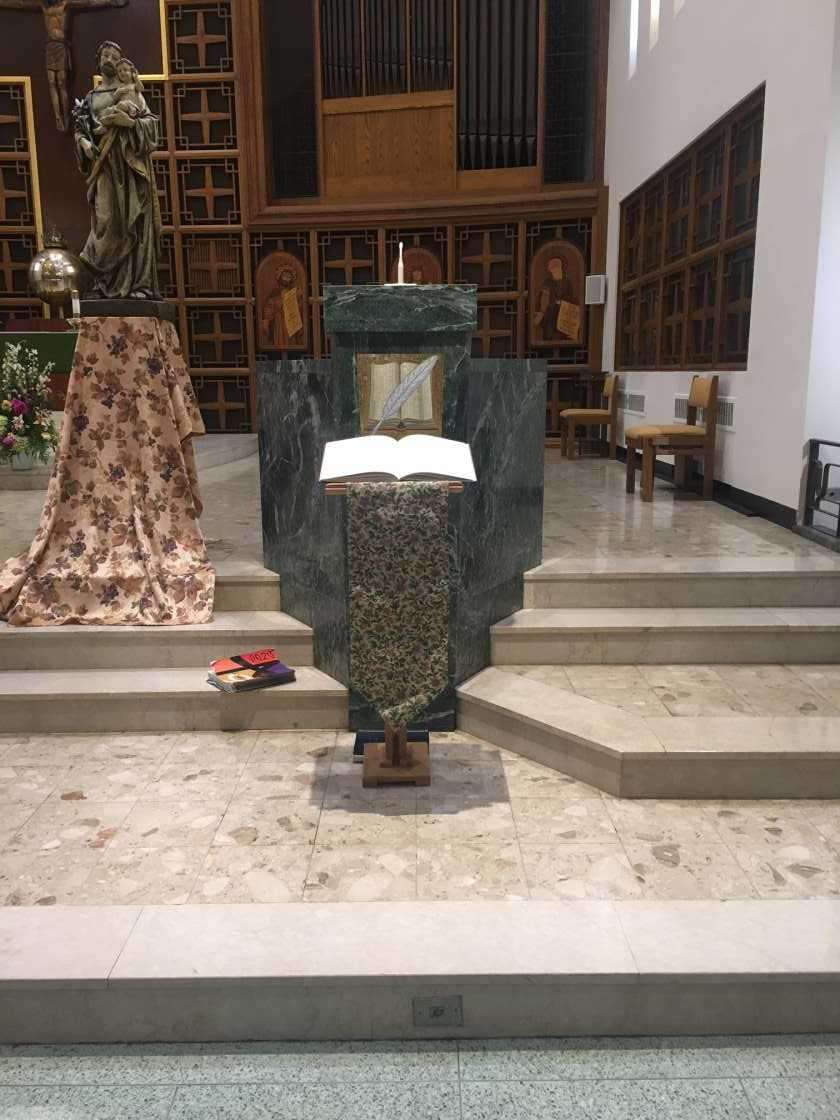
Please inscribe the names of your deceased loved ones in the Memorial Book of the Dead during this month of November when we pray for all the souls of the faithful departed in a special way.
